
Welcome to the Leatherverse: My Adventures in Leathercraft
The world of leather is vast. Enormous. Leather is a global industry, replete with retailers, wholesalers, manufacturers, and tradespeople. There are huge multinational corporations that depend on leather, and there are micro-manufacturers, small businesses, side hustlers and hobbyists who depend on it just as much. The leather world is so vast and interconnected with other industries that it’s probably more accurate to call it a leather ecosystem, or the leather universe. Or something with a little more pizzazz, like… the Leatherverse.
Yeah, the Leatherverse, that’s perfect. Especially if you’re into nerd shit like I am, and especially if you’re a leather nerd like I am.
Into the Leatherverse
I’ve been bending leather for relatively short amount of time (I started in 2019), but I fell in love with the craft almost immediately. The process of making things relaxes me. The process of learning things makes me happy. The process of planning and sketching and patterning helps me stay grounded and organized. The slow and deliberate nature of the craft teaches me patience. The process of trying, failing, trying again, and then finally succeeding gives me self-esteem. Making things and giving them to my friends is one of my great joys in life.
I love this craft so much, but in the beginning I was very protective over it. The first few years after I picked up the hobby, I refused to sell my work, but rather preferred to give my creations away. I sold a few things here and there over the years, but it wasn’t until 2025 that I decided to take the plunge and turn this thing into a real business, or at least a real side hustle. Though, I will be keeping my day job for the foreseeable future.
The best laid plans of mice and men
Originally I’d planned on leathercraft being just a hobby—mainly because in the past I've made the mistake of turning all of my favorite hobbies into jobbies, only to have the economics of scale obfuscate the joy and relaxation that I used to get from the hobby. It happened with DJ-ing and nightclubs back in the late-nineties. It happened with recording studios and audio gear in the early-aughts. It happened with vintage clothing and collectibles back in the twenty-teens. Leathercraft, I hoped, would be different.
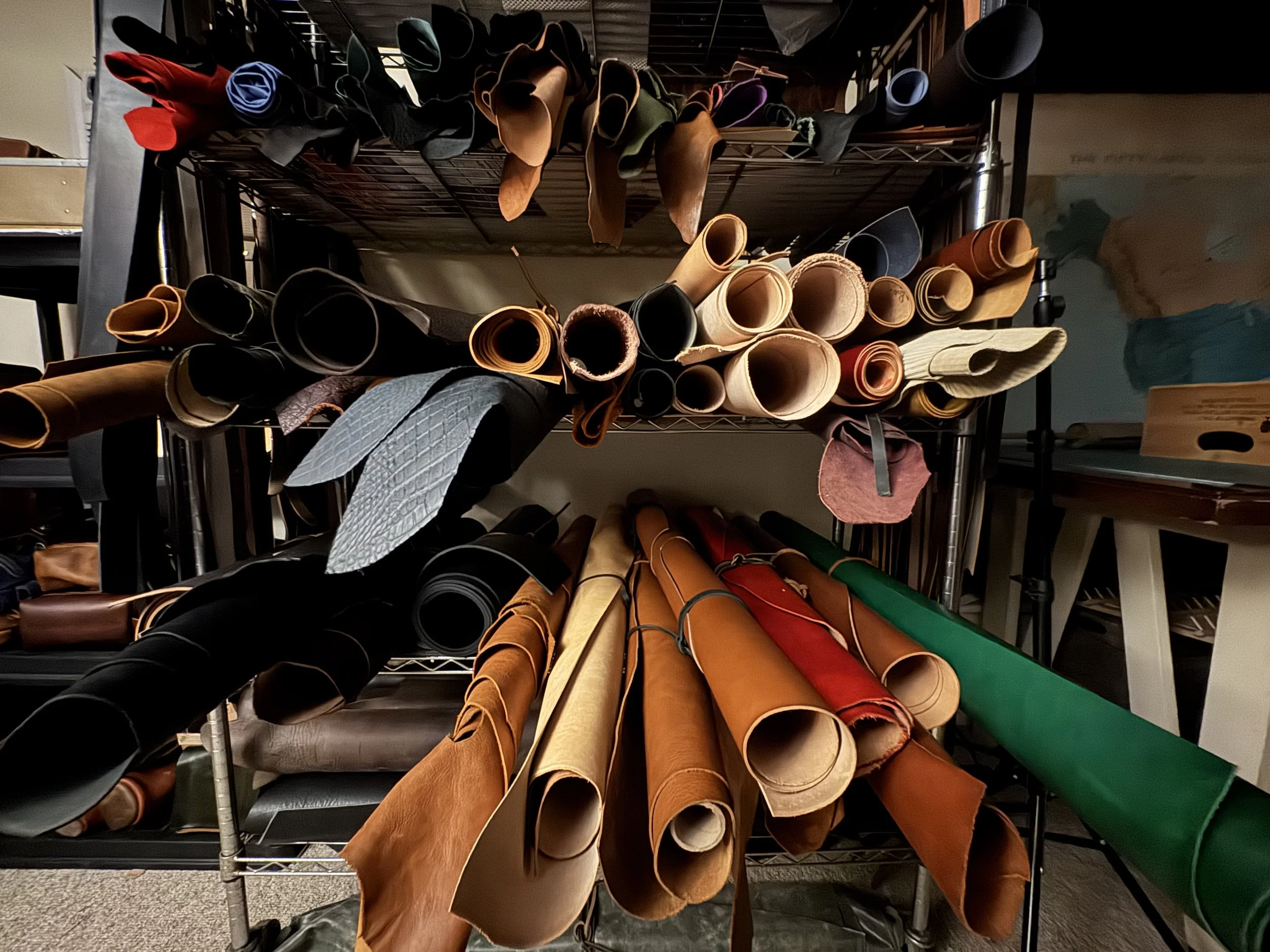
My original plan with leathercraft was to keep my footprint small, my costs low, my ambitions small. I thought I would go to thrift stores and buy used belts and leather jackets, and then cut them up to make keychains and pouches. A nice, small, manageable hobby. That plan lasted for about a week.
My leather obsession
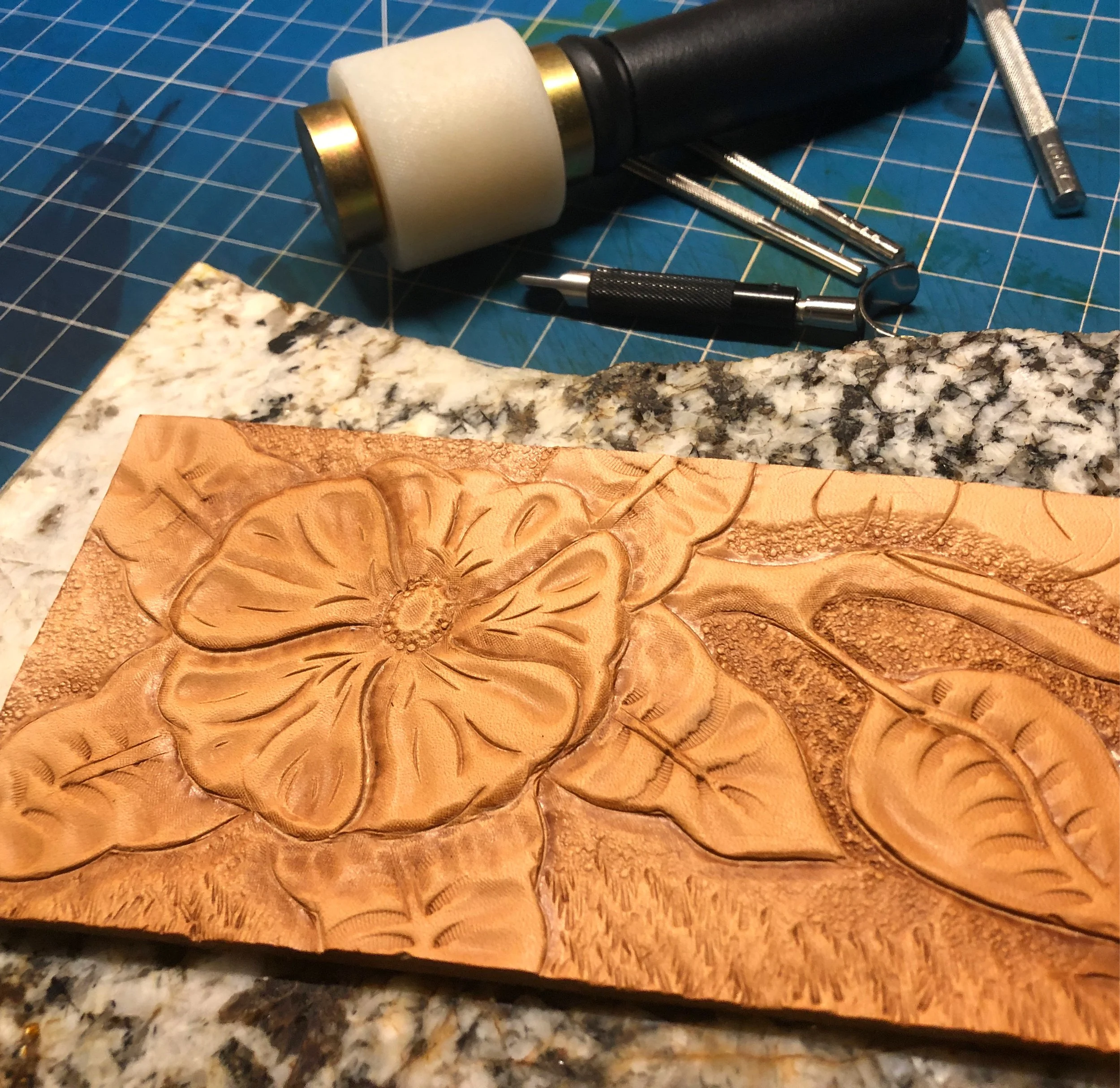
I quickly realized that the leathers used for belts and jackets was not the kind of leather I wanted to work with (belts were too thick, and jackets too thin). So I branched out into veg tan leather, which I hand-dyed and finished in a small bedroom workshop. That was super fun, because unlike jacket-leather, which is chrome tanned, veg tan leather can be tooled, stamped and carved. Tooling became one of my first leather obsessions, and it’s a corner of the craft that I’m still in love with.
As I started buying more and more leather, I learned that there are different tanning mixtures that yield different results. Similar to the way different cultures use what’s available to them to distill alcohol and spirits, there are regional variations of tanned leather that depend on the local flora for their defining characteristics. Acacia, black wattle, oak and oak bark, chestnut, mimosa and quebracho… each has its own special place in the Leatherverse.
Then there are chrome-tan and combination-tanned leathers, with each tannery using its own special blend of tannins to create their signature leathers. Of course I had to try every different tanning mixture I could find, ever searching for that perfect leather that would solve all my problems and make me feel complete. Spoiler alert: they’re all amazing.
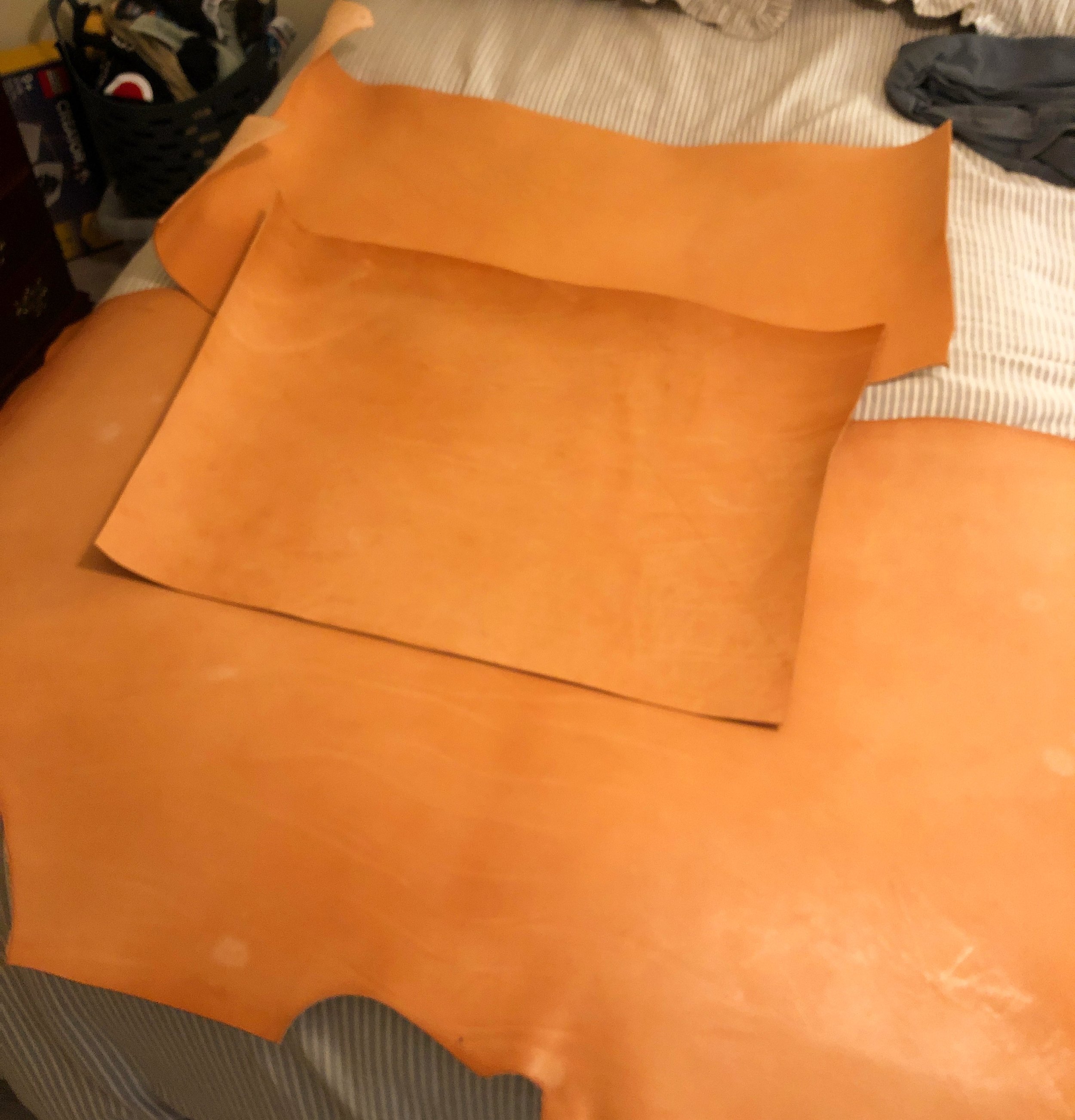
Soon after I started using veg tan cowhide, I realized that I couldn’t achieve the bright colors and intricate textures I was seeing online with hand-dying alone. That’s when I started buying dyed and finished leathers, which really upped the quality of my work, but also increased my costs.
Alongside pre-dyed cuts of leather were the different types of hides: sheep, water buffalo, bison, bull, goat, lamb, calf, horse… each hide has its own unique quirks, its own personality. Buffalo is wrinkly and thick, calf is smooth and clean, sheep and lamb are the softest. Goat is thin and strong, but horse is the strongest, and the thinnest. I tend to only use leather from animals that are raised as livestock, so I haven’t worked with many exotic leathers, but I must say I’m curious. I’m just not sure about the ethics behind alligator, cayman, crocodile, and snake, so I’m not rushing to go down that road just yet. Same goes for furs and pelts, though I don’t get inspired much by hair-on hides.
Oh, and then there are the different cuts of leather: bends, sides, shoulders, double shoulders, bellies, butts, culattas, whole hides. Different parts of the hide are good for different purposes. Backs and butts are good for belts, straps and holsters. Shoulders are good for bags and high end accessories. Bellies are loose and grainy so they’re cheap and good for practice. Once I knew that these different options were out there, I just had to learn the differences, features, and benefits of each one, right? RIGHT??
Christ, don’t even get me started on the hardware. Solid brass and solid steel, zinc, copper, chrome, gold plated, PVD, electroplated. D-rings, O-rings, zippers (YKK baby), clasps, tuck locks, twist locks, purse frames, wallet chains, tri-glides and squeeze buckles, and that’s just what I could come up with off the top of my head.
The tools of the trade
Next, of course, came the tools. Now, being that I’m a 40-something male, I’m legally required to be obsessed with tools of all kinds, but leather tools? Now that’s a worthy obsession. It started modestly, as these things often do. My first tools were a utility knife, a couple of cheap edge bevelers, and a hole punch. Pretty soon I’d bought just about every moderately priced wingding and doodad that Tandy Leather had to offer.
Bevelers and cutting tools, lace makers and rivet setters, rawhide mallets, punches, round knives, straight knives, skiving knives, swivel knives and tooling stamps, I bought them all, and I set my mind to learning how to use each one. One day I was about to buy a $100 solid-steel rotary punch, and noticed that it had Made in China stamped on the handle, and it rang a bell.
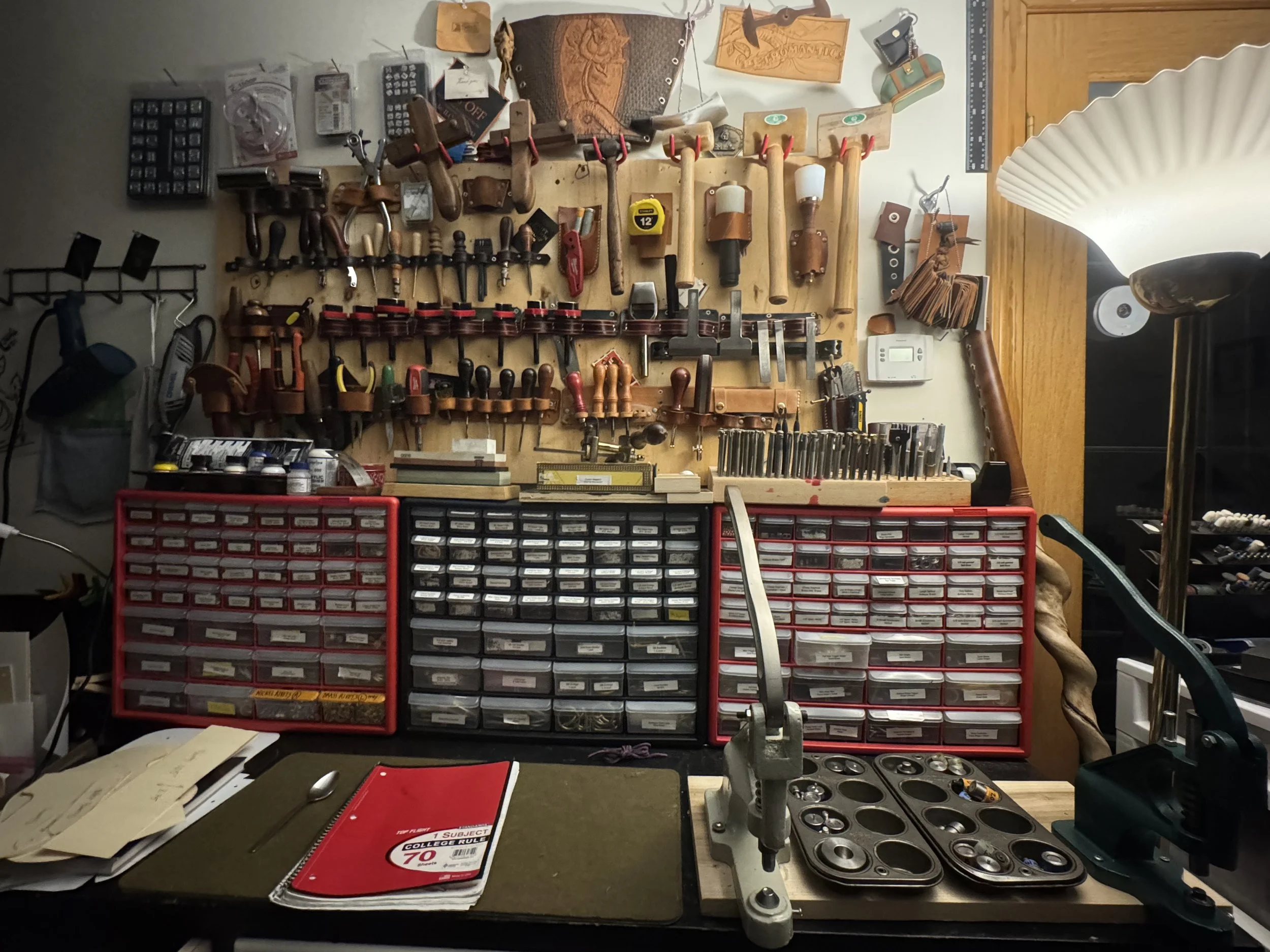
I started taking a closer look at the other leather tools on my bench, and saw that almost all of them were made in China, Taiwan, Hong Kong, Vietnam. Now, my day job is in eCommerce, and I have decades of experience in retail, so I know a little about manufacturing and distribution. If major retailers like Tandy are buying their product from Chinese manufacturers, then that meant that somewhere out there was a manufacturer or distributor selling the same exact tools as unbranded or b-stock, and usually at a much lower price.
I started doing some digging, and wouldn’t you know it? If you look hard enough, the internet is filled with discount versions of the exact same leather tools I’d been buying at a retail premium. I even found some good deals on T*mu and Am*zon.
Finding the bargains
Hoo boy. If there’s one thing I love more than buying tools, it’s buying tools at a discount. It’s not just a money thing, it’s also an ego thing. When I find a bargain-basement deal on something that I was already planning on buying anyway, it feels like I’ve won the game. I feel smart, accomplished, informed. Like I’ve discovered some hidden secret that only a handful of people know. I could blame my poverty-stricken childhood, or the fact that I’m Italian-American and everyone in my family is obsessed with sales and discounts, but the truth is, it just feels good to put in the extra work and be rewarded by paying a little less.
As for finding the deals online, it turns out Google Image Search is pretty handy for tracking down overseas distributors camped out on demand-gen platforms like Al*Express. That’s when my tools-and-leather buying habit really took off.
From crafter to business owner
As I started learning more about the the craft of leather, I also started learning about the business of leather. The more I learned about leather, the more I realized I didn’t know. Crafting is just the tip of the iceberg, and I want to know everything.
Entire worldwide industries rely on leather—purses, handbags, wallets, weekenders, luggage, work boots, cowboy boots, sneakers, and dress shoes, just to name a few. Then there are the professional sports that rely on leather, from the balls—basketballs, footballs, soccer balls, and baseballs are all made of leather—to the protective equipment, cleats, baseball gloves, batting gloves, golf bags, and millions of other professional grade products that are made of leather.
Then, of course, there are the horses, and the ubiquitous use of leather in equestrian endeavors. Saddles, stirrups, reins, harnesses, riding boots, saddle bags, and all that other horse shit—er, stuff. And I haven’t even gotten into the leather used for auto interiors, orthopedic and medical equipment, industrial and farm equipment, tools and tradespeople, and about a million other industries that rely on leather daily to function.
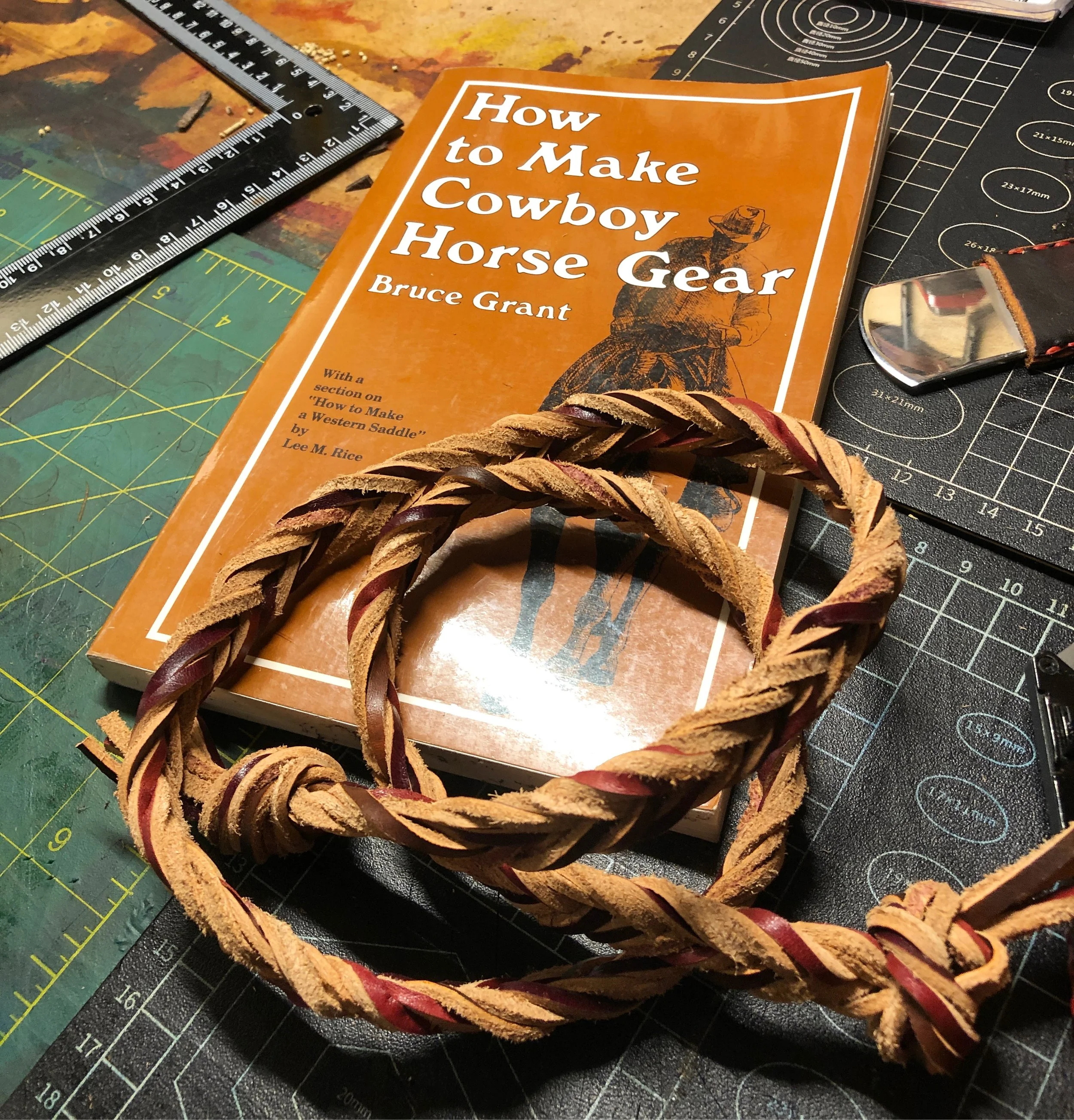
It turns out that leather is one of the largest industries on the planet—and one of the oldest. People have been tanning leather for as long as we’ve been eating meat. But unlike other materials, which are directly sourced for their uses, leather starts as a byproduct. If we stopped tanning all leather tomorrow, the hides would still end up in landfills, because we can’t eat them. Leather is honestly the most sustainable materials on the planet.
Feeding the beast
I feel like this is a good time to mention that I have a history of addiction, and a tendency to get obsessed with learning and research-based hobbies. So now I had two obsessions: learning and researching leathercraft techniques to get better at making things, and learning and researching the leather industry as a whole to trace tools and materials back to their source so I could feed my primary habit at a discounted rate. Thank God I have a day job, or I would have spent myself into the poor house.
My journey into the leatherverse has a lot more twists and turns. As I continued to upskill into more complex techniques and fine builds, my need for tools continued to grow. I never want to be limited by my tools, and so I’ve made a deal with myself to spend good money on things that will help me advance my craft. I just recently started looking at machines and more expensive “forever” tools, and that’s where I am today.
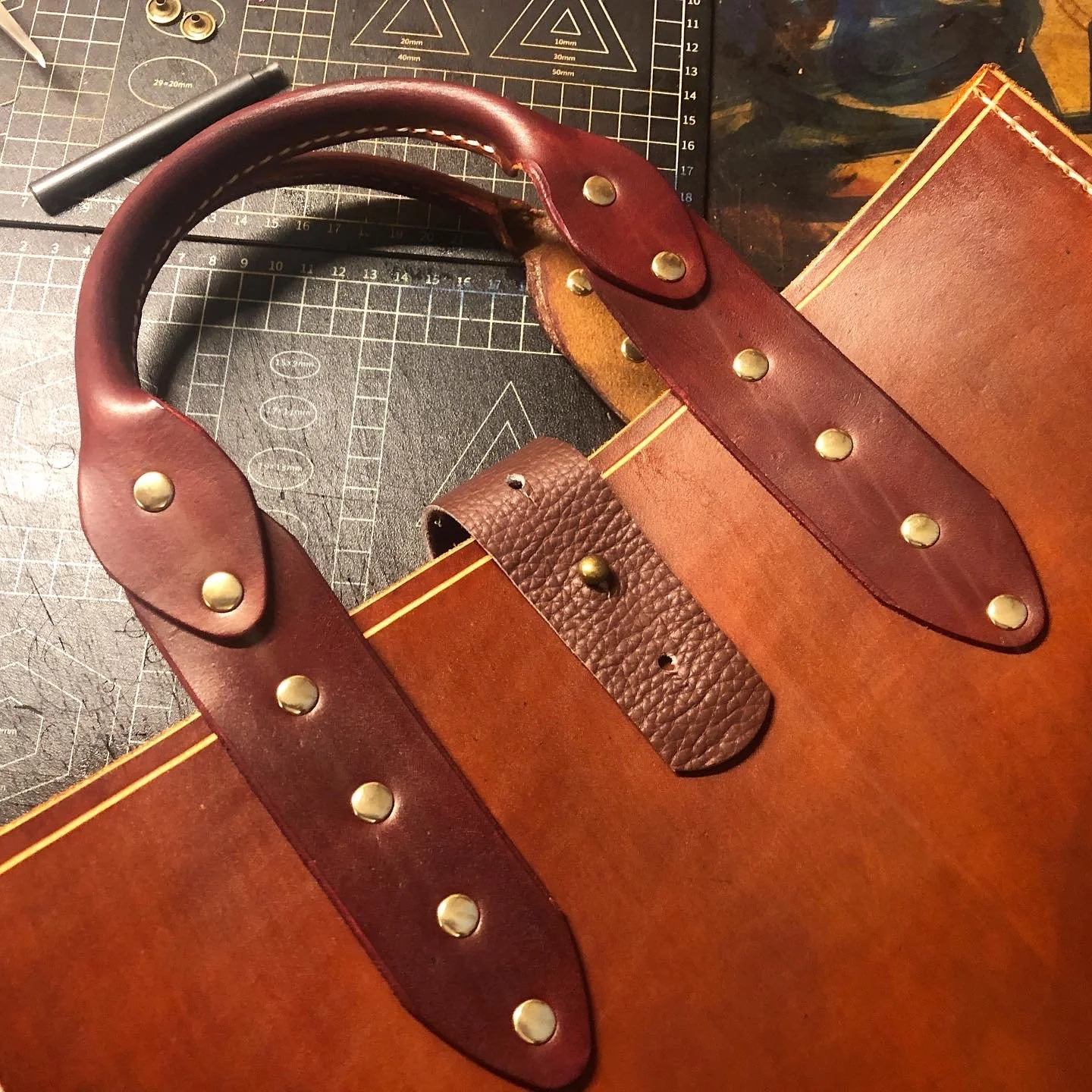
I’m currently saving up to buy a $3,000 leather sewing machine. I’m hoping to someday buy an $1800 clicker press, or have custom cutting dies made so that I can reduce my build times and make my products more profitable. Sometimes I think about buying a leather skiving machine (only $600!), or a heated edge creaser (only $1500), or a laser engraver, or a 3D printer, or any one of a dozen high-end professional tools.
The problem is, as the beast of my leathercraft habit becomes bigger, it requires more food: more skill, more time, more materials, more planning, more forethought, and more money. A lot more money.
More money, more problems
My only complaint about the business side of my leathercraft journey is that I wish I could sell more stuff. Sure, I’m able to scrape together a few hundred dollars in sales per month, which covers some of my raw materials, but doesn’t even come close to paying back the thousands that I’ve invested in tools and materials, not to mention the time I’ve spent building this brand.
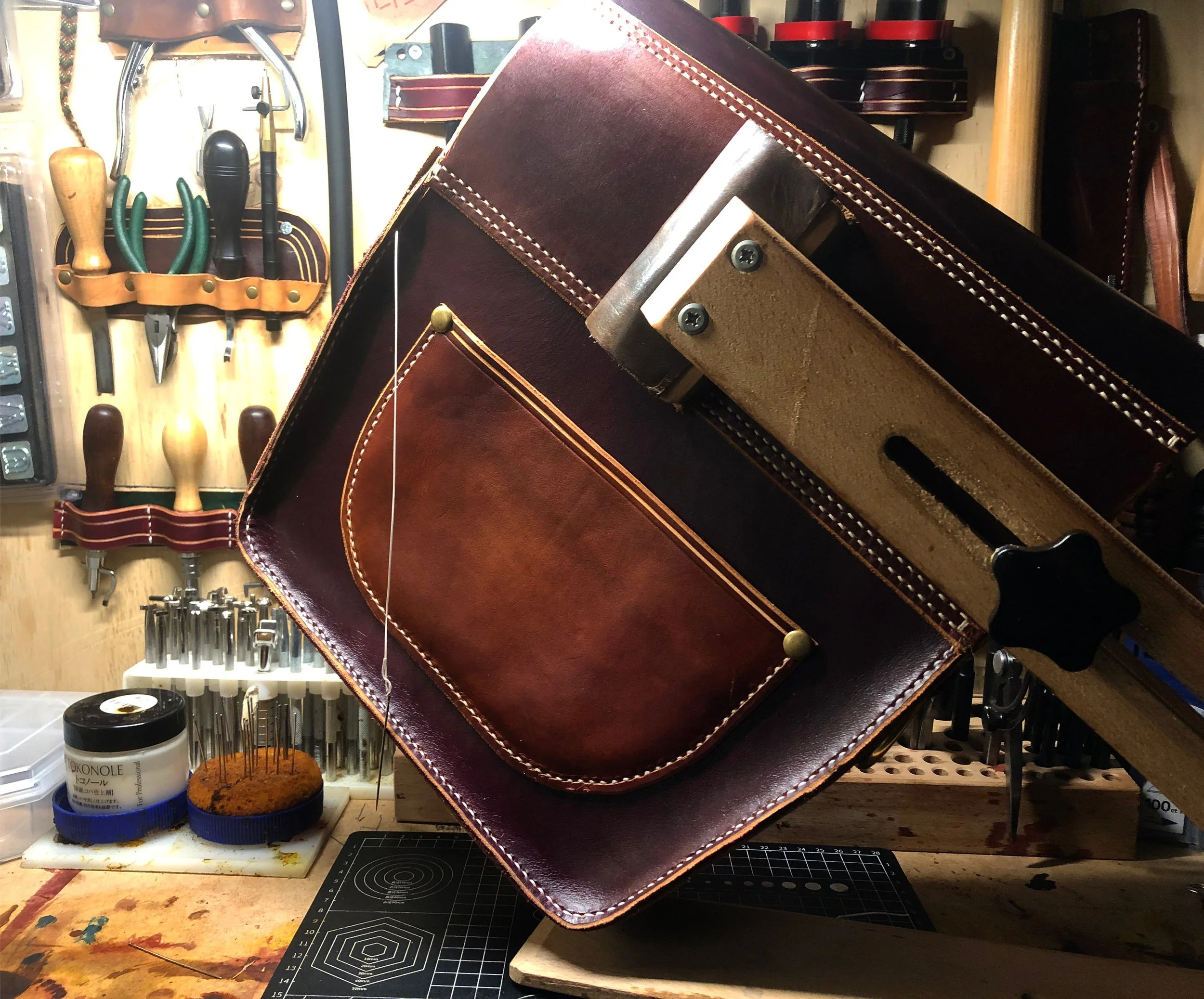
What I’m trying to do with Swift Leatherworks is quite simple, actually. I want to put together a small catalog, maybe ten or twenty “permanent” SKUs, and let those sell in the background as I continue to upskill in this trade.
My only requirements are enjoyment, and quality. I don’t want to make junk, I want to make good stuff. Useful stuff. Beautiful stuff. Nothing too complicated, but well made, nice looking, and durable. The kind of products that people are actually interested in buying, that could be sold at a fair price where the customer still gets a good deal, but I make a little bit of bread. Not a lot of money, but you know, enough to keep the stove hot and the toilets flushing.
My long-term goal is to earn enough money to pay for my materials, and give me enough of a cushion that I can spend more time focusing on my designs, and less time worrying about how I’m going to pay for all this stuff.
And that, dear friends, is the first stop on your guided tour of the Leatherverse.
